Gulf Land Integrated Investment co

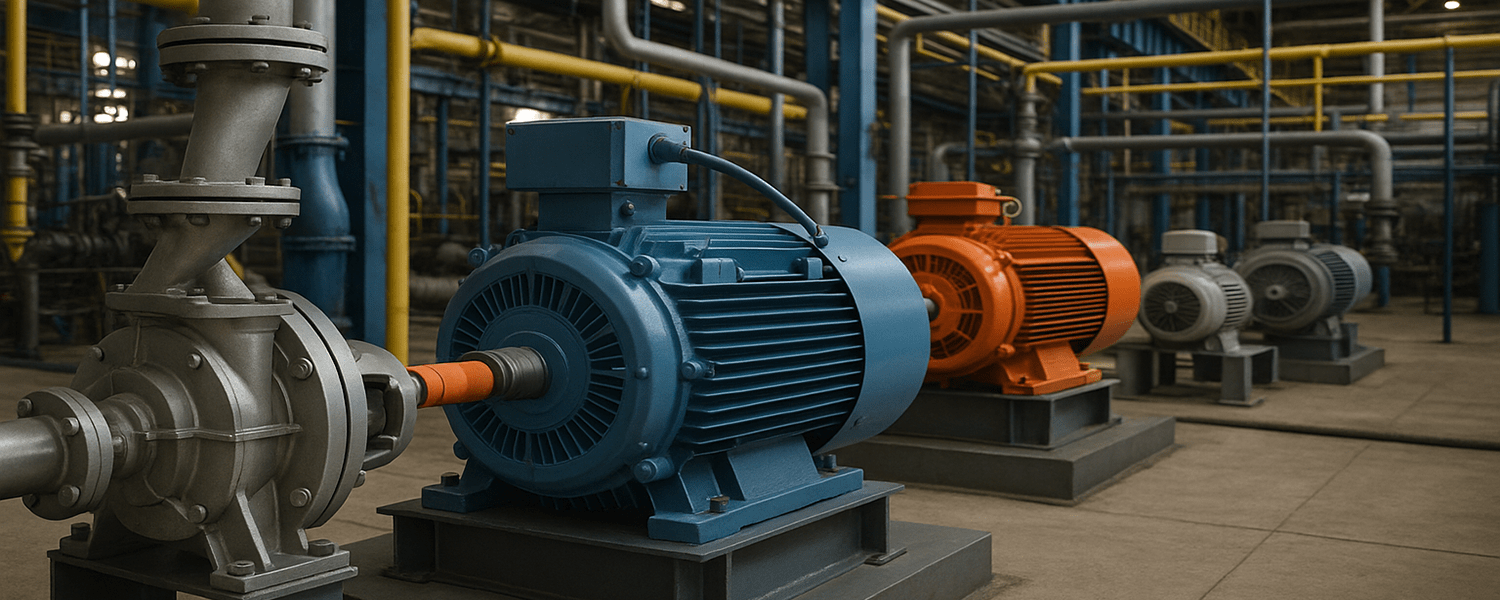
Electric motors are essential devices that convert electrical energy into mechanical energy. They form the backbone of modern industrial operations, enabling machinery to perform efficiently and reliably. From small motors used in household appliances to large-scale motors in industrial plants, these machines are critical for driving processes and reducing human labor.
The versatility of electric motors allows them to be applied across multiple industries, including oil and gas, petrochemical, steel manufacturing, and power generation.Electric motors have evolved significantly over the decades, with improvements in efficiency, precision, and durability. Selecting the right motor type and design is crucial to optimizing performance, reducing energy consumption, and ensuring long-term reliability.
AC (Alternating Current) motors are among the most widely used motors in industrial applications. They are preferred due to their simple construction, high reliability, and relatively low maintenance requirements. AC motors are suitable for continuous operation and can handle high loads, making them ideal for heavy industries.
Induction motors, also known as asynchronous motors, are the most common type of AC motor. They operate without brushes and commutators, reducing wear and tear. Induction motors are robust, cost-effective, and capable of withstanding harsh industrial environments. They are commonly used to drive pumps, fans, compressors, and conveyor systems in various sectors.
Synchronous motors operate at a fixed speed, synchronized with the supply current frequency. These motors are used in applications requiring precise speed control, such as conveyor systems, extrusion machines, and generator excitation systems. Synchronous motors are valued for their high efficiency and power factor correction capabilities.
DC (Direct Current) motors are renowned for their precise speed and torque control, making them suitable for variable-speed industrial applications. These motors are often used in machinery where accurate positioning or controlled motion is essential.
Brushed DC motors use carbon brushes and a commutator to transfer current. They offer excellent torque at low speeds and are relatively simple to operate. However, they require regular maintenance due to brush wear. Typical applications include cranes, hoists, and small industrial machines.
Brushless DC motors eliminate brushes and commutators, offering higher efficiency, lower maintenance, and longer operational life. They are widely adopted in modern industrial systems, including precision pumps, automated assembly lines, and robotics.
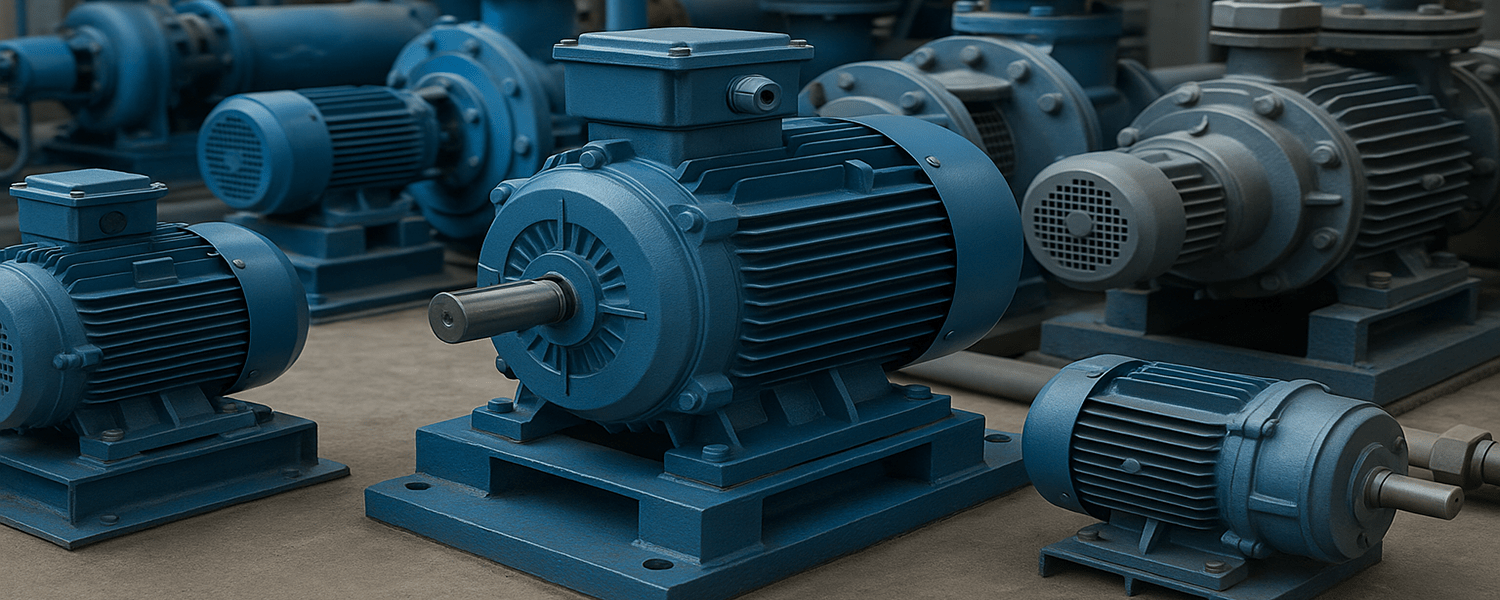
In the oil and gas sector, electric motors are indispensable for driving pumps, compressors, drilling rigs, and other essential equipment. Motors used in this industry often require explosion-proof designs to ensure safety in hazardous environments. High-torque motors are necessary to operate heavy-duty pumps and compressors efficiently, maintaining smooth and reliable production processes.
Electric motors in petrochemical plants power pumps, mixers, compressors, and ventilation systems. The reliability of these motors is critical for continuous chemical processing, where downtime can result in significant financial losses. Motors with precise speed control are also essential for maintaining process consistency and quality.
The steel industry relies heavily on electric motors to operate rolling mills, cranes, conveyors, and other material-handling equipment. Motors in this sector need to handle high loads and operate under extreme conditions, such as high temperatures and heavy mechanical stress. Durable induction and synchronous motors are preferred for their long service life and reliability.
Power plants use electric motors to drive auxiliary equipment, including pumps, fans, and blowers. Synchronous motors are often used for generator excitation systems, ensuring stable voltage and frequency. Induction motors are employed for circulating water, cooling systems, and other supporting processes, contributing to efficient and continuous power production.